

The Indian credit and charge card payments market is anticipating a boom in 2025, as it expects to reach ₹25.4 trillion, with a 14% growth. The rise in usage and customer affinity towards credit cards in India is backed by the growing sophistication of the fiscal landscape. The attractive benefits, offers, and reward points system offered by competing cards allow customers to enhance their overall lifestyle, making a credit card beneficial not only for its credit facility but also as an efficient way to get discounts and offers.
However, a pan-India study by Savesage revealed that 70% of credit card users fail to optimally use their credit card rewards. Therefore, this blog reveals how a credit card reward points calculator can help you comprehensively analyse the rewards of a card and compare it with its peers, so that you can choose the card that fits you best.
Introducing Credit Card Reward Points
Before exploring the meaning and use case of the credit card reward points calculator, it is necessary to get a brief overview of credit card reward points.
Credit cardholders earn reward points by using the card to make payments for various commodities. These points can be converted into cashback, free air miles, or gifts. This is a type of loyalty incentive that cardholders earn.
Let’s take an example to understand this better.
For instance, the table below lists the rewards of the SBI Prime Credit Card.
| SBI Prime Credit Card | |
| Amount spent on the birthday | 20 reward points for every ₹100 |
| Amount spent on dining, departmental stores, groceries, and movies | 10 reward points for every ₹100 |
| Any other expense apart from fuel expenditure | 2 reward points for every ₹100 |
| 4 Reward Points = ₹1 | |
Now, imagine if Mr K earned 20,000 points at the end of the year. So, this means he would get a reward of ₹5000.
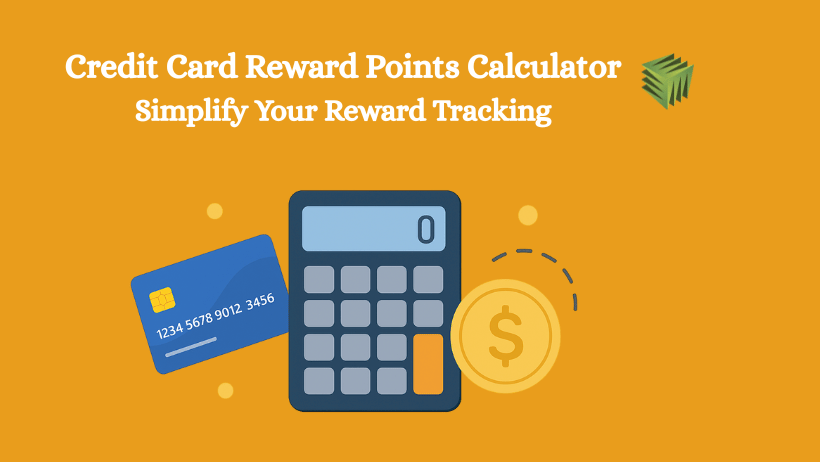
Now, let us introduce you to a credit card reward points calculator and explore its features.
What is a Credit Card Reward Points Calculator?
The credit card reward points calculator is a digital tool that uses specifics of a card, like issuer name, card category and name, along with other details to give a comprehensive list of its rewards. Usually, there are two categories of credit card reward points calculators online.
| Parameters | General Calculators | Specialised Calculators |
| Meaning | These calculators use generic information to give a list of rewards that are there on the card. | In these calculators, users can calculate the amount of reward points accrued to the particular cardholder. |
| Inputs | Card issuer name, card variant, transaction category, etc. | Amount spent by the holder through the card, card issuer name, card variant, transaction category, etc. |
| Benefits | It is beneficial for researching specific cards since documents can contain complicated language. Moreover, they also help in comparing different card rewards to select the best. | This helps in optimal financial planning. It aids in planned expenditure on a credit card already purchased to earn maximum rewards. |
| User Category | Useful before a card is purchased | Useful after a card is purchased |
However, like any tool, the credit card reward points calculator has both advantages and limitations.
Advantages and Limitations of the Calculator
Understanding the benefits and limitations of the calculator that helps analyse the credit card rewards aids in informed fiscal decision-making.
Discussed below are the advantages of the credit card reward points calculator.
- Comparative Analysis: The calculator helps compare the rewards of different credit cards.
- Selection: It aids in choosing a card that gives maximum reward benefits within your debt tolerance limit.
- Fiscal Prudence: These calculators help instil fiscal discipline and avoid unplanned expenditures.
- Easy-to-Use: Most online calculators are easy to use and devoid of complex calculations.
Listed below are the limitations of the credit card reward points calculator.
- Dynamic Factors: These calculators can often overlook dynamic factors like point devaluations, expiry dates, or taxes on redemptions. These can cause overestimation of values.
- Limited Options: The presence of credit card reward points calculators online can be limited, resulting in restricted options for users.
- Preseance Cards and Issuers: All issuers and card categories might not be listed in a calculator.
- Efficiency: The backend algorithm, based on which the calculator operates, plays an important role in maintaining its efficiency.
However, before using a credit card calculator for rewards, individuals should be aware of certain factors.
Factors to Consider Before Choosing a Credit Card Reward Points Calculator
Listed below are certain parameters that a prospective credit card holder should know before using a calculator or finalising a card based on rewards.
- Exclusions: Reward points can be limited to certain categories of expenditures alone. For instance, if the XYZ card gives 10 points for every ₹100 spent on Nykaa, then a cardholder cannot expect rewards on purchases from Amazon.
- Caps: A credit card issuer can set caps on rewards earned or redeemed in a given period. For instance, XYZ credit cards allow only 10% of accrued credit redemption per month.
- Conversion Rate: There is no uniform rate for converting points to cash, free air miles, gifts, etc. Therefore, check the terms of your particular card through the issuer or a calculator to make an informed choice.
- Personalisation: Choosing a card with a greater reward is not enough. Individuals can aim for a card that meets their consumption patterns.
- Fees vs Rewards: Along with the rewards, individuals should also consider the annual fees, onboarding charges, etc. Analysis of both helps optimise cost and benefit.
Bottomline
Rather than avoiding debt altogether, a healthier fiscal attitude might be to optimise its usage. Using a credit card reward points calculator is a means to achieve an informed credit card choice by analysing the rewards offered by it. Individuals can comparatively analyse the benefits offered by different cards to choose the one that suits them the most.
DISCLAIMER: The information given in this blog is for educational purposes only. Any content of this blog is not investment advice.