
Retail inflation in India, based on the Consumer Price Index in September 2026, reached 5.54%, with year-on-year food inflation at 7.74%.
This means everyday items like milk, vegetables and clothes are becoming much more expensive, making our money buy less over time. Besides, a salary increase alone might not solve this problem, as your rent, loan EMIs, insurance premiums and family expenses would grow alongside. This is why financial planning in India is important.
Whether you are just starting your first job, raising a family or getting ready to retire, this financial planning checklist in India will guide you step-by-step. Let us look at how you can plan your money at every stage of life.
Quick Answer:
A financial planning checklist in India helps you manage your income, expenses, savings, investments and insurance at every stage of life. It covers five key stages: building financial independence in your 20s, managing family responsibilities in your 30s, creating wealth in your 40s, preparing for retirement in your 50s and managing savings after retirement. Regularly reviewing your budget, investments, insurance and financial goals can help you build long-term financial stability.
Key Takeaways
- A financial planning checklist in India helps you manage income, expenses, savings, investments and insurance at every stage of life.
- Build emergency savings, get adequate insurance, start investing early and adjust your financial plan as your income and family responsibilities change.
- Avoid delaying retirement planning, ignoring inflation and investing without clear financial goals to maintain long-term financial stability.
What is Financial Planning in India?
Financial planning is the process of deciding how you will earn, spend, save, invest and protect your money. It connects your current income with the expenses and goals you expect to meet in the future.
It goes beyond simply maintaining cash reserves or picking random stock tips; it is a structured roadmap designed to grow wealth safely while protecting against life’s uncertainties.
For example, imagine you earn ₹60,000 a month and pay ₹15,000 for rent, ₹8,000 towards a loan, ₹18,000 on household expenses and ₹4,000 on transport to the office and other needs. This leaves you with ₹15,000 after all the fixed expenses.
Without a plan, this amount could disappear into online shopping, eating out and unplanned purchases. However, with a financial plan, you can divide this between emergency savings, investments and future expenses.
The 5-Step Financial Planning Checklist in India for Different Life Stages
Your financial needs at the age of 25 will not be the same as at 45 or 65. You may be paying off an education loan today, saving for a house in a few years and preparing for retirement later.
This 5-step framework for personal financial planning in India can help you to make suitable financial decisions across stages of life, from building your first savings to managing money after retirement.
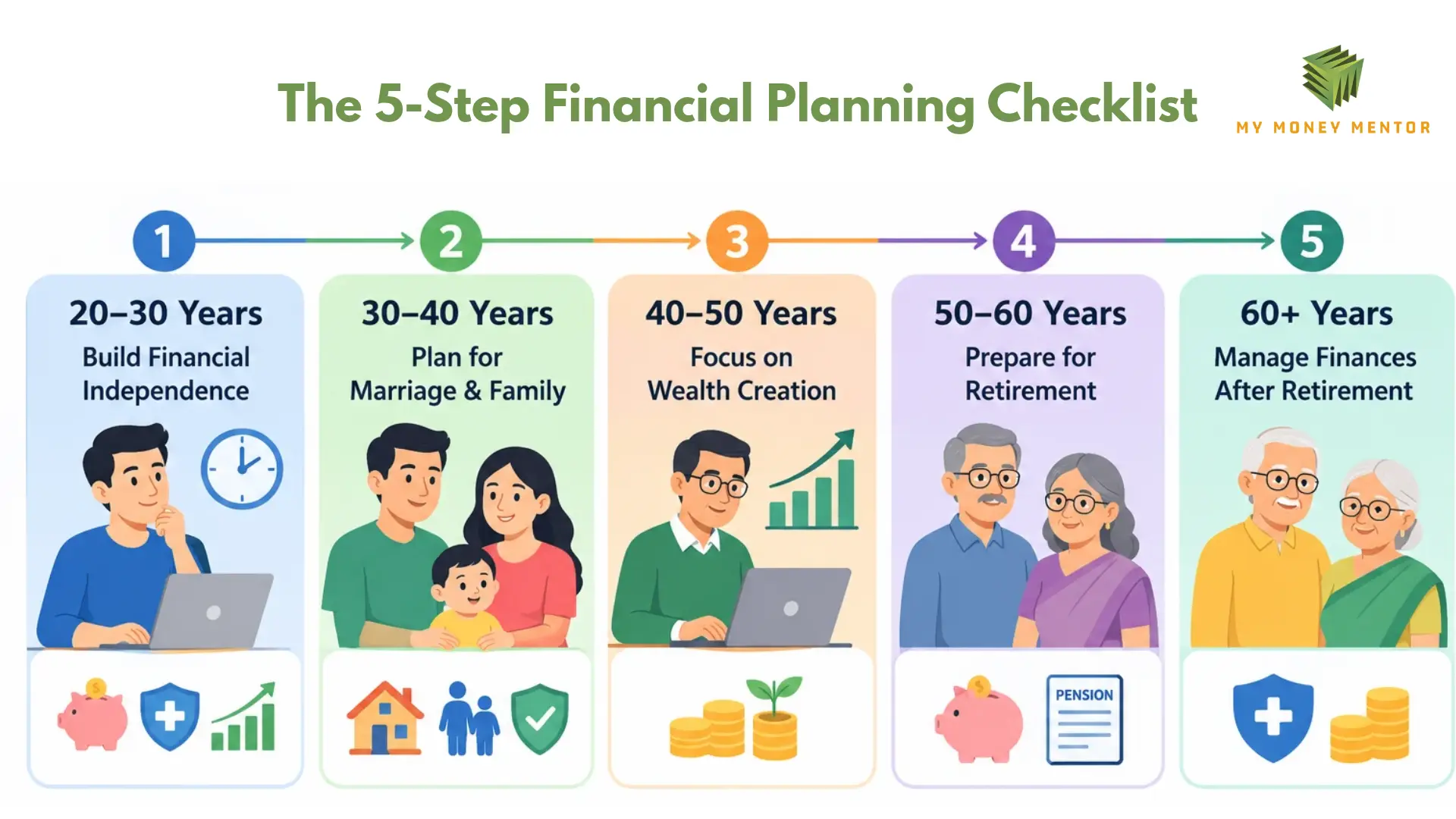
1. Establish Financial Independence (20–30 Years)
In your early 20s, the greatest asset you have is time if you can leverage it properly. This becomes your foundational stage as you start your professional journey and build your financial planning checklist in India.
Here is what you can do if you are someone in this age group:
- Build an emergency fund: The early 20s can involve hopping around different jobs to explore and find stability. This may leave you with an unreliable source of income. So focus on building an emergency fund for around 3 to 6 months to guard yourself against any odds.
Let’s say you are 25 and earn about ₹40,000 per month. You spend about ₹25,000 on essential expenses. So your emergency fund might look like:
| Monthly essential expenses | ₹25,000 |
| Emergency fund target | 6 months |
| Required emergency savings | ₹1,50,000 |
| Monthly contribution | ₹5,000 |
| Time required | 30 months |
- Get health insurance: As you find your true interest and settle down, consider getting suitable insurance coverage apart from what your employer provides. For instance, given the rising medical inflation, having health insurance would protect you against spending your savings on hospital bills.
- Start investing: In your early 20s, if you do not have a family to take care of, have limited expenses and responsibilities, it offers you the benefit of putting that money towards investing in options like mutual funds, PPF and other suitable investments, depending on your goals and risk tolerance. This also helps you build a retirement fund.
- Manage debt: Adult money can make it tempting to spend on things you do not really need, especially to keep up with trends or maintain a certain lifestyle. This can make credit cards and loans more attractive. You should avoid unaffordable borrowing, especially high-interest debts, unless it is an extreme emergency.
Explore these investment options for young earners to understand where you can start!
2. Manage Dependants and Financial Responsibilities(30–40 Years)
During this decade, marriage, having children, purchasing a house or supporting ageing parents may increase your financial responsibilities. Your financial plan should consider these expenses while keeping long-term savings and investments on track.
Here are the things you can plan for before they put pressure on your monthly budget:
- Create a household budget: Creating a budget provides a fair picture of your current financial situation and highlights how much you need to save and invest for your future. It also helps you understand your spending capacity and ability to repay debts.
For example, you have ₹20,000 left after meeting household expenses and loan EMIs. The amount can be allocated as such:
| Purpose | Monthly allocation |
| Child education fund | ₹5,000 |
| Retirement savings | ₹6,000 |
| Emergency fund | ₹3,000 |
| Home purchase savings | ₹4,000 |
| Short-term goals | ₹2,000 |
| Total | ₹20,000 |
- Review insurance covers: Review whether your existing cover is enough for both the partners and reassess your term insurance based on your current income, financial liabilities and dependants.
- Plan major purchases: You can set up investments or specific mutual funds dedicated to goals like a home loan, vehicle loan or child education and calculate the EMI alongside your regular expenses. But note that the returns are market-linked and not guaranteed.
- Additions to your emergency fund: Since the main objective of an emergency fund is to save up for contingencies, with growing family responsibilities, you may need to increase your savings to cover your entire household’s expenses.
- Continue saving for retirement: After meeting household expenses and family responsibilities, make sure you continue contributing towards your retirement savings. Prioritising retirement early can help you build a sufficient corpus for your later years.
You can also develop better spending and saving habits by following these money habits that support wealth creation!
3. Focus on Wealth Creation (40–50 Years)
By this stage, you may earn more than you did in your 20s. Your children could be joining college, which makes providing for their higher education a priority. However, this is also a significant stage to strengthen your financial position, while accounting for changing family needs.
- Review your investments: Check whether your mutual funds, deposits, shares and other investments still match your goals. Do not continue an investment only because you have held it for years.
- Increase retirement contributions: When your salary rises or a loan ends, direct part of the extra money towards retirement savings. You can increase your EPF, PPF, NPS or mutual fund contributions rather than allowing every salary increment to become additional spending.
- Evaluate insurance needs: In consideration to your growing age, upgrade your life cover and health insurance to complement your present health conditions.
4. Prepare for Retirement (50–60 Years)
As retirement is closer now, your focus should shift from growing wealth to protecting it and planning how you will use it.
- Estimate your retirement needs: List the monthly expenses you expect after retirement, including food, housing, travel, medical care and family support, in consideration to the rising costs.
For instance, say that your current monthly household expenses are ₹30,000. At an assumed annual inflation rate of 6%, your estimated monthly expenses after 20 years would be:
| Particulars | Details |
| Current monthly expenses | ₹30,000 |
| Assumed annual inflation | 6% |
| Retirement planning horizon | 20 years |
| Estimated monthly expenses after 20 years | ₹96,214 |
| Estimated annual expenses | ₹11.55 lakh |
Note: This is an illustrative calculation, not an inflation forecast. Actual expenses will depend on your location, healthcare requirements and lifestyle.
- Estimate retirement income: Add up expected pension payments, investment income and withdrawals from your savings. Compare this with your estimated monthly expenses.
- Review retirement savings: Evaluate your EPF, PPF, NPS, mutual funds, deposits and other investments and estimate how much income or savings they may provide.
The following government-backed savings instruments may form part of your retirement portfolio:
| Investment instrument | Interest rate* | Time period | Potential purpose |
| EPF | 8.25% | Until retirement or withdrawal eligibility | Retirement savings for eligible employees |
| PPF | 7.10% | 15 years, extendable in 5-year blocks | Long-term savings |
| SCSS | 8.20% | 5 years, extendable by 3 years | Regular retirement income for senior citizens |
| NPS | Market-linked | Until retirement, generally age 60 | Retirement corpus and pension-related withdrawals |
| NSC | 7.70% | 5 years | Fixed-income savings |
| RBI Floating Rate Savings Bonds | 8.05% | 7 years | Interest income |
*Interest rates as applicable as of 9 November 2026.
- Review investment risk: You may not want money needed soon to depend heavily on market movements. Match your investments with the time when you will need the funds.
- Reduce outstanding loans: Try to enter retirement with manageable liabilities. If you have a home loan, check whether you can repay it without exhausting your savings.
- Organise important documents: Review your will, nominations, insurance details and details of your financial accounts. Tell a trusted family member where these records are kept.
Explore our guide on retirement planning in India to understand different investment options for building your retirement corpus.
5. Manage Finances After Retirement (60+ Years)
Finally, you retire, which stops your regular salary, but your expenses will continue. Your savings now need to support you for many years.
- Plan withdrawals carefully: Decide how much you can withdraw from your savings without running out of money too early and avoid making any large withdrawals for non-essential purchases.
- Keep healthcare funds ready: Maintain money for medicines, medical tests and unexpected hospital visits.
- Maintain liquid savings: Keep enough accessible money for regular expenses and emergencies. Avoid locking all your savings into products with long withdrawal restrictions.
- Evaluate your will and nominees: Update documents after major family changes and make sure your intended beneficiaries are correctly recorded.
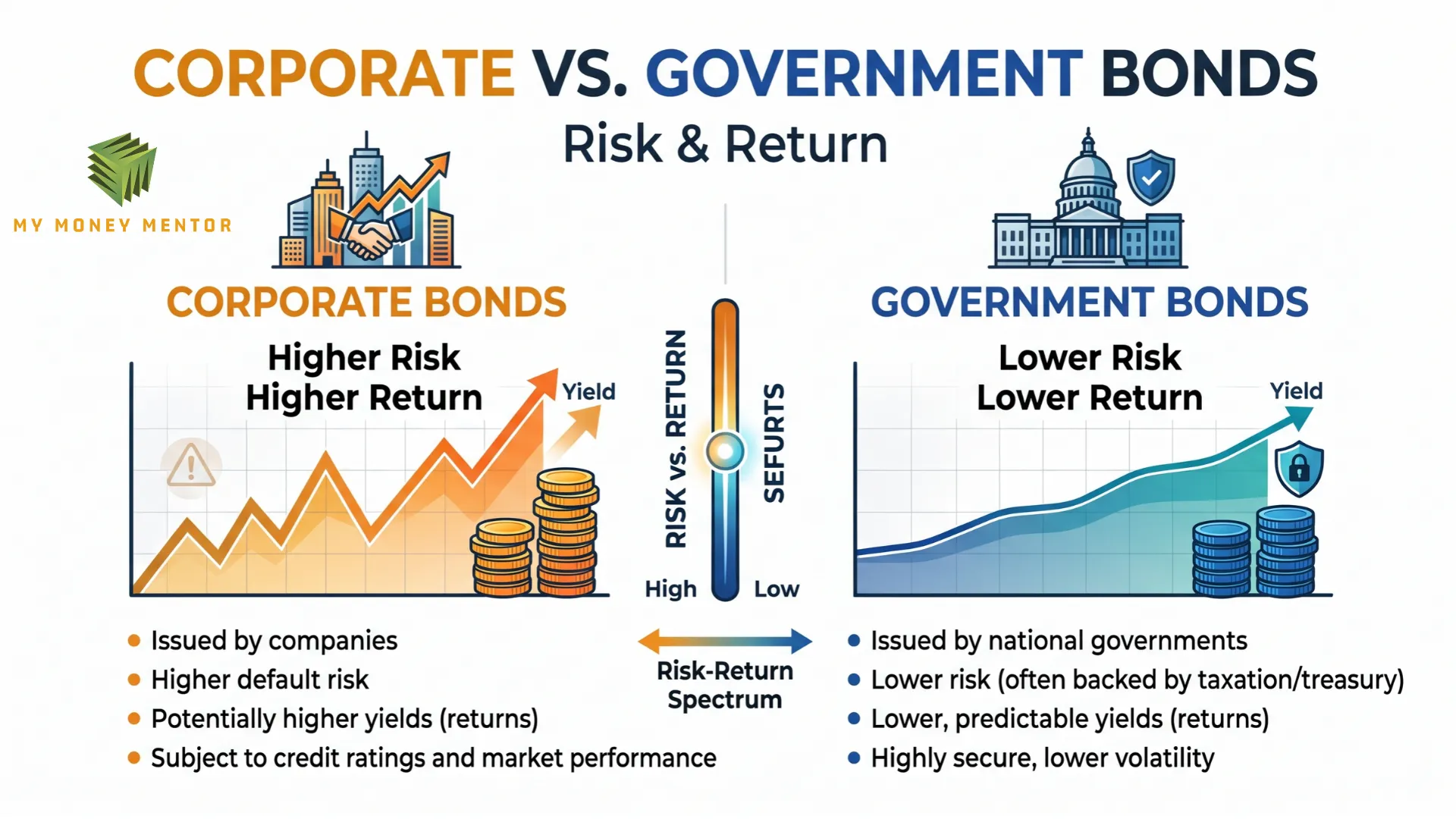
- Rework Your Investment Portfolio: Finally, consider shifting some investments from high-risk assets like equities to relatively safer options such as FDs or high-quality bonds to protect your retirement savings while maintaining suitable returns.
How to Periodically Review and Rebalance Your Financial Plan
While the plan is set, it can change over time depending on priorities or life circumstances. Besides, personal financial planning in India can vary by individual depending on their needs, income, responsibilities and risk tolerance.
Here is how you can keep your financial plan relevant in general:
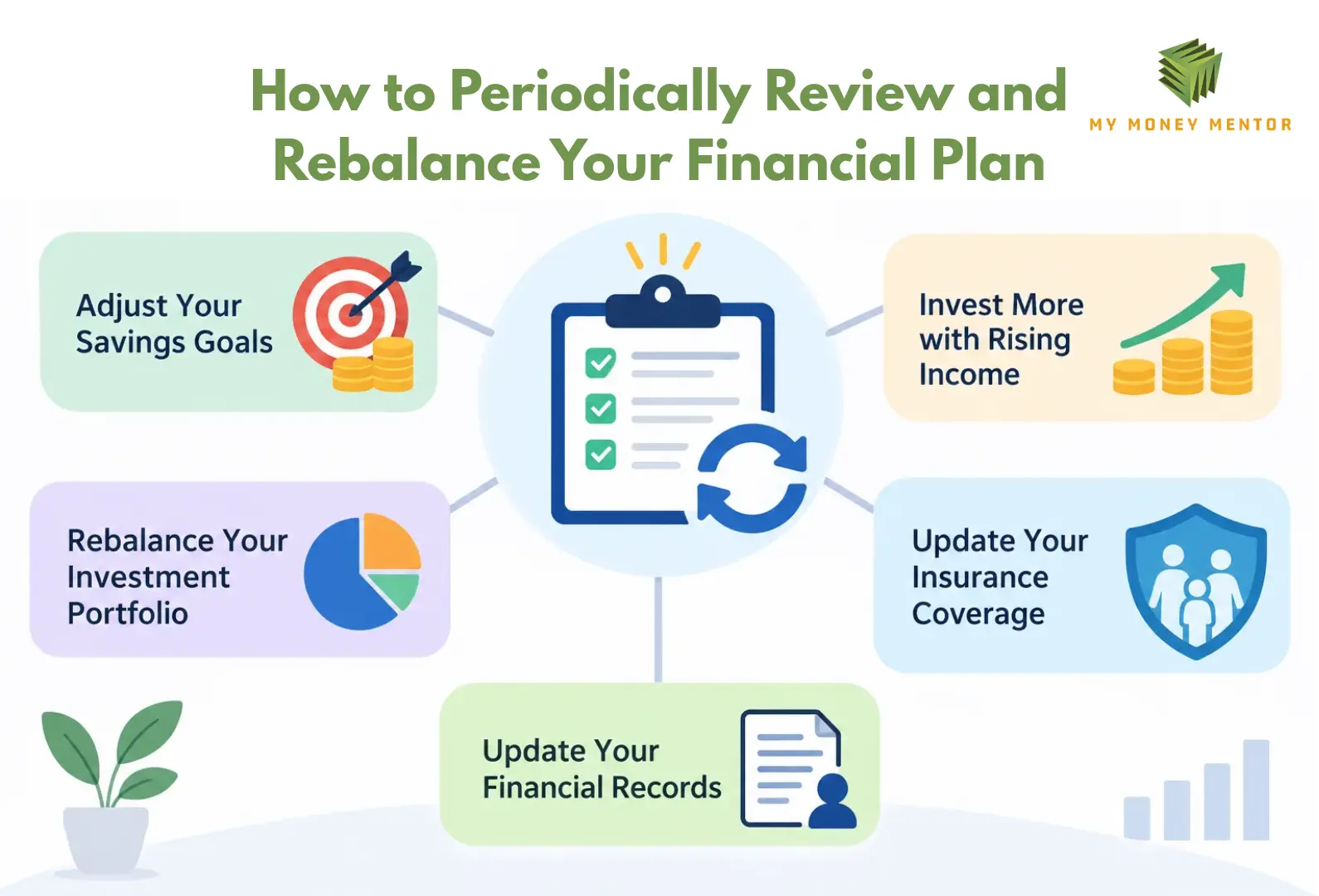
- Adjust your savings goals: As your income, expenses and financial priorities change, revise your savings targets to match your current needs and future goals.
- Increase investments with rising income: When your salary increases or a loan ends, invest part of the additional money to build wealth without stretching your monthly budget, instead of upgrading your lifestyle expenses.
- Rebalance your investment portfolio: With changing market movements, change your asset allocation and rebalance your investments to maintain the level of risk suited to your financial goals.
- Update your insurance coverage: As your family grows, income changes or liabilities increase, reassess your life and health insurance to maintain adequate financial protection.
- Update your financial records: Whenever you experience major life changes, update your nominees, will and insurance details so your assets reach the intended beneficiaries.
Financial Planning Mistakes to Avoid in India
Even if you earn well, a few common mistakes can affect your financial future. Watch out for the following:
- Delaying emergency savings: Imagine your company lays you off and you have no savings to cover rent or loan EMIs. You may have to borrow money or sell investments at the wrong time. This is why building an emergency fund is important before taking on unnecessary financial commitments.
- Depending only on employer-provided insurance: Your company may provide health insurance, but the cover may be limited or may end when you leave the job. Consider separate health insurance based on your needs.
- Investing without goals: Buying a mutual fund because a friend recommended it does not make it suitable for your needs. You should decide whether you are investing for a house, education or retirement. Then select investments according to your time horizon and risk tolerance.
- Ignoring inflation and healthcare costs: The amount you spend today on groceries, transport and medical care may not be enough to meet these expenses 5 years later. Account for rising costs when estimating your future savings requirements.
- Postponing retirement planning: If you start saving for retirement at 45 instead of 25, you lose two decades of potential investment growth. Start with an affordable contribution and increase it as your income grows.
- Failing to update financial records: Marriage, childbirth, divorce and the death of a family member can change who should receive your financial assets. Review nominees, insurance beneficiaries, wills and account details after major life events.
Conclusion
Building a secure financial future starts with small, well-planned decisions. With the age-specific financial planning checklist in India, you can manage everyday expenses, prepare for major life events and work towards long-term financial goals.
My Money Mentor explains how you can make these decisions at every stage of life. As starting with what you can afford today helps you to build disciplined financial habits, keep improving your plan and give your money room to grow.
FAQs
Q: What are the 4 pillars of financial planning?
Ans: Financial planning is commonly built upon the four core pillars that ensure stability, risk protection and long-term wealth growth.
Q: How much of your monthly income should you save?
Ans: While your savings depend on your income, expenses and financial goals, most financial experts recommend saving and investing at least 20% of your monthly net income (take-home pay).
Q: How do you calculate your net worth?
Ans: You can calculate your net worth by subtracting your total liabilities, including loans and outstanding dues, from your total assets, such as savings, investments, property and other valuables.
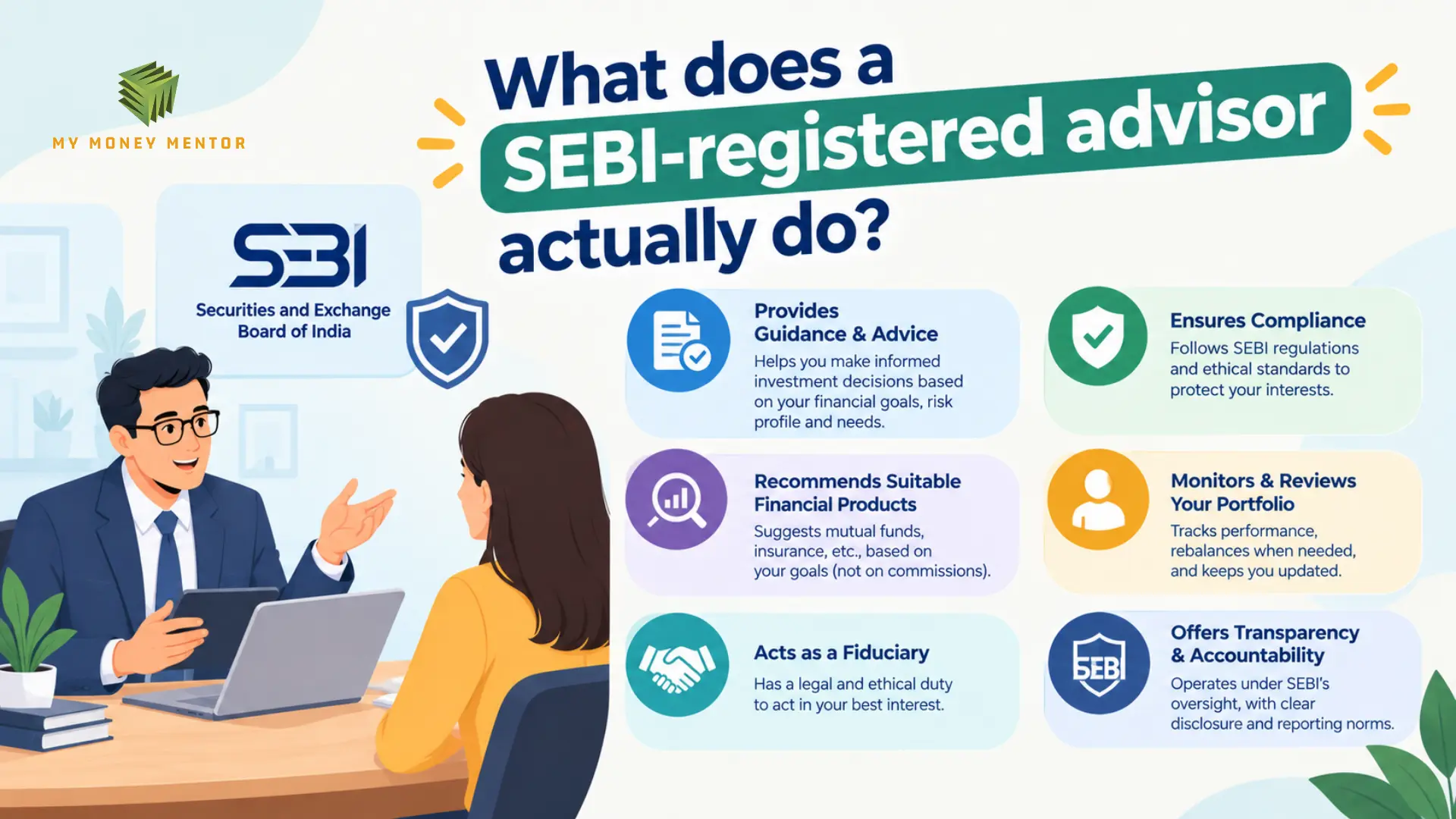
Q: Should you consult a financial planner in India?
Ans: You can consult a qualified financial planner if you need help assessing your finances, setting investment goals, managing risks or planning for retirement.
Q: Does having a financial plan guarantee wealth creation?
Ans: No. A financial plan provides direction, but market fluctuations, inflation, unexpected expenses and changes in income can affect your ability to achieve financial goals.