
If you are researching how to invest in bonds India, you can buy certain bonds without depending on a traditional stockbroker. Platforms such as RBI Retail Direct allow individual investors to buy Government of India securities, Treasury Bills and State Development Loans directly. For corporate bonds, you can use SEBI-registered Online Bond Platform Providers (OBPPs) to explore and purchase eligible debt securities.
Quick Answer:
Investors in India can buy bonds without a traditional stockbroker through platforms such as RBI Retail Direct and NSE goBID. These platforms provide access to government bonds, Treasury Bills and State Development Loans, while SEBI-registered Online Bond Platform Providers offer access to eligible corporate bonds. Before investing, compare credit ratings, interest rates, yield to maturity, maturity dates and liquidity to understand the potential risks and returns.
Key Takeaways
- Investors can buy government bonds, Treasury Bills and State Development Loans directly through RBI Retail Direct without a traditional stockbroker.
- NSE goBID allows resident individuals to participate in eligible government securities and Treasury Bill auctions.
- Before investing, compare the bond’s credit rating, coupon rate, yield to maturity, maturity date and liquidity.
What Does Investing in Bonds Without a Broker Mean
Investing in bonds without a broker means buying bonds without depending on a traditional stockbroker to place your investment order. Instead, you use a platform that allows you to access bonds directly.
For example, an individual can use the RBI Retail Direct platform to buy Government of India securities, Treasury Bills and State Development Loans. The investor can open a Retail Direct Gilt (RDG) account with the RBI and participate in government securities auctions or buy and sell securities in the secondary market.
Routes to Invest in Bonds Without a Broker in India
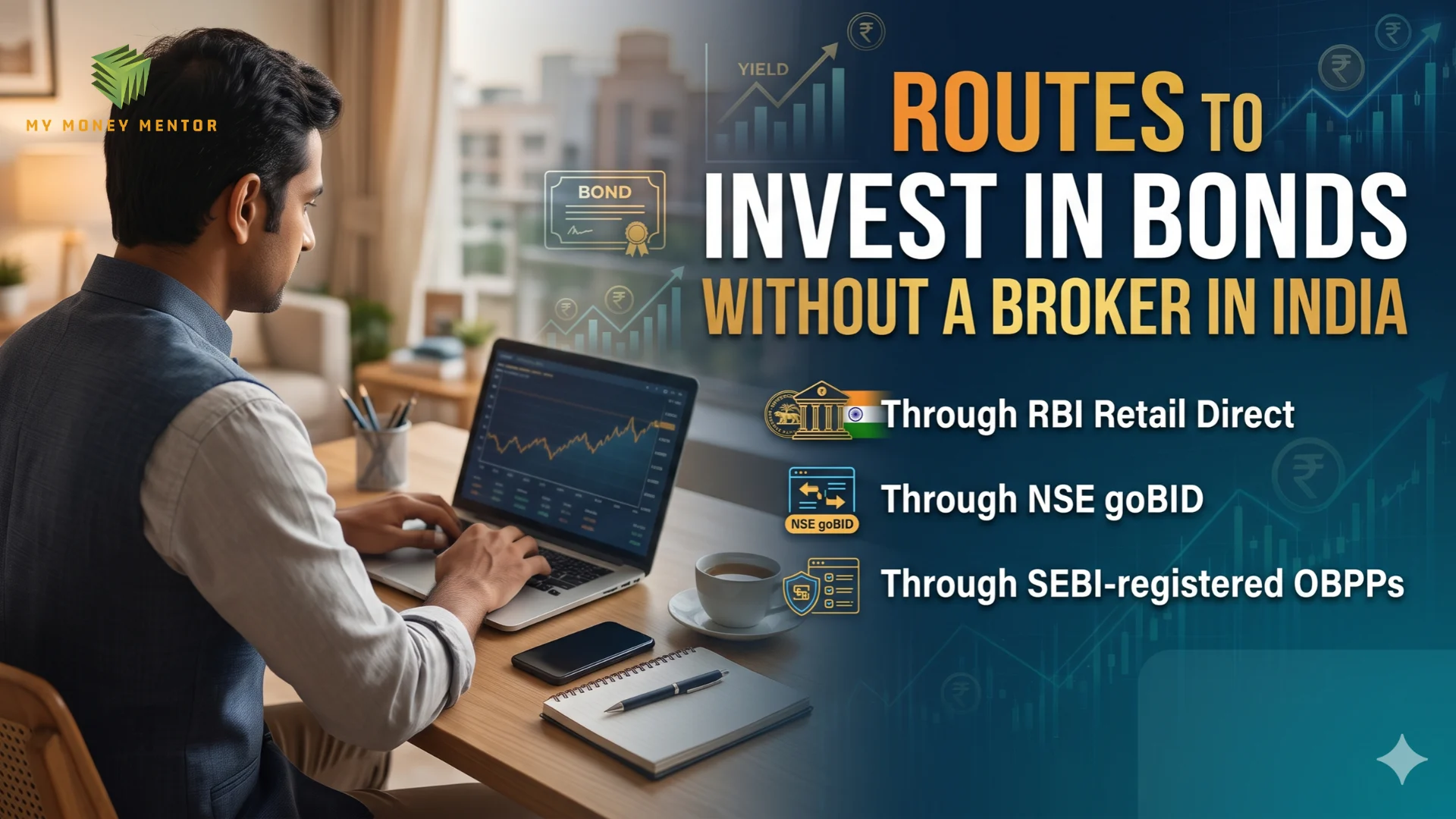
Investors in India have different ways to buy bonds without using a traditional stockbroker. If you are exploring how to buy bonds in India, the right route depends on whether you want government securities or corporate bonds.
Through RBI Retail Direct
RBI Retail Direct allows individual investors to buy and sell government securities without opening an account with a traditional stockbroker.
To use this facility, investors need to open a Retail Direct Gilt (RDG) account with the Reserve Bank of India. They can then invest in:
- Government of India Treasury Bills (T-Bills).
- Government of India dated securities (G-Secs).
- State Development Loans (SDLs).
- Sovereign Gold Bonds, subject to issuance or secondary-market availability.
Through NSE goBID
NSE goBID is an online platform that allows eligible retail investors to participate in government bond and Treasury Bill auctions. Unlike the usual route through a trading member, resident individuals can register directly on goBID if they meet the platform’s requirements. Through this platform, investors can apply for Treasury Bills and Government of India dated bonds. If you want to understand how to buy government bonds in India, NSE goBID is another route to explore.
If you are researching how to buy corporate bonds in India, these platforms allow you to access eligible listed debt securities without using a traditional stockbroker.
How to Buy Bonds In India
There are two ways through which you can buy bonds in India without a stockbroker.
Through RBI Retail Direct
RBI Retail Direct allows individuals to buy government securities directly from the RBI without a stockbroker. Follow these steps:
Step 1: Register online: Visit the RBI Retail Direct website and enter your PAN, mobile number, email ID and bank details.
Step 2: Complete verification: Verify your details and complete the KYC process to open a Retail Direct Gilt (RDG) account.
Step 3: Log in to your account: Once your account is active, log in to view the available government securities.
Step 4: Choose a security: Select from Treasury Bills, government bonds or State Development Loans (SDLs).
Step 5: Place your bid: Choose the security you want and enter your investment amount. You can also buy existing securities through the secondary market.
Step 6: Make the payment: Pay using your linked bank account through UPI or net banking. Once the purchase is completed, the securities appear in your RDG account.
Through NSE goBID
NSE goBID allows individual investors to buy government securities in primary auctions without going through a stockbroker. Follow these steps:
Step 1: Register on the platform: Visit the NSE goBID website and complete the registration process.
Step 2: Complete KYC: Provide your PAN and other required details for identity verification.
Link your accounts: Enter your bank and demat account details to receive the securities and make payments.
Step 3: Select a bond: Log in and check the available Treasury Bills and government securities in the auction section.
Step 4: Enter your bid: Select a security and enter the amount you want to invest. The minimum investment is ₹10,000, in multiples of ₹10,000.
Step 5: Make the payment: Pay through the available online payment options.
Receive your bonds: After allotment, the securities are credited to your demat account.
Types of Bonds You Can Invest in
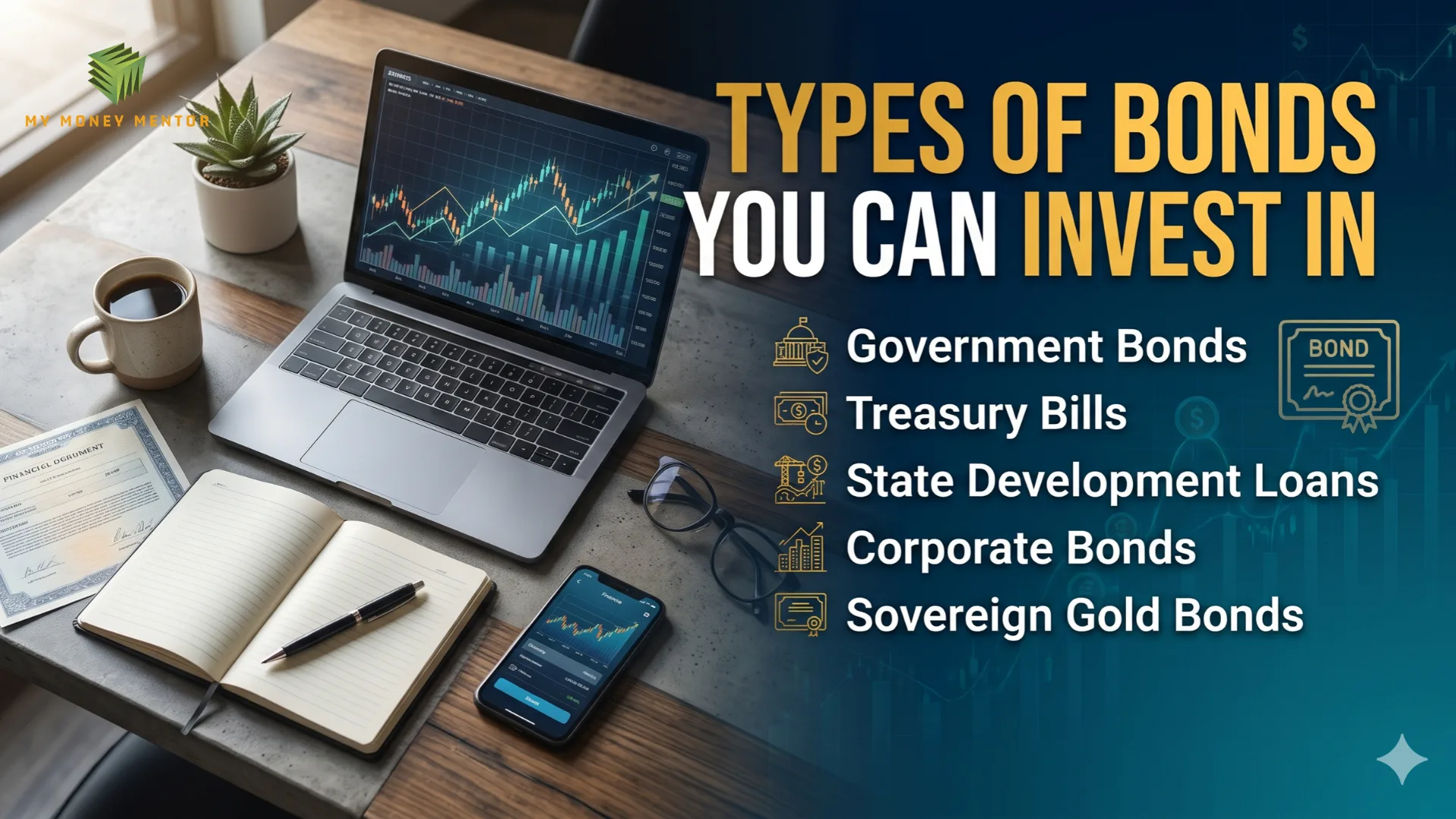
You do not need a traditional stockbroker to invest in every type of bond. In India, individual investors can access several government securities directly through RBI Retail Direct. They can also explore eligible corporate bonds through SEBI-registered Online Bond Platform Providers (OBPPs).
- Government bonds: Government bonds are issued by the Central Government to raise money. You can buy them directly through RBI Retail Direct or participate in auctions through NSE goBID. They generally pay interest every six months and return the principal at maturity.
- Treasury bills: Treasury Bills are short-term securities issued by the Central Government. They have maturities of 91, 182 or 364 days. They do not pay regular interest. Instead, you buy them below their face value and receive the full face value at maturity. You can purchase T-Bills through RBI Retail Direct or NSE goBID.
- State Development Loans: State Development Loans are bonds issued by state governments to raise funds for their financial needs. They work like government bonds, with interest payments and repayment of principal at maturity. You can access them through RBI Retail Direct without a traditional broker.
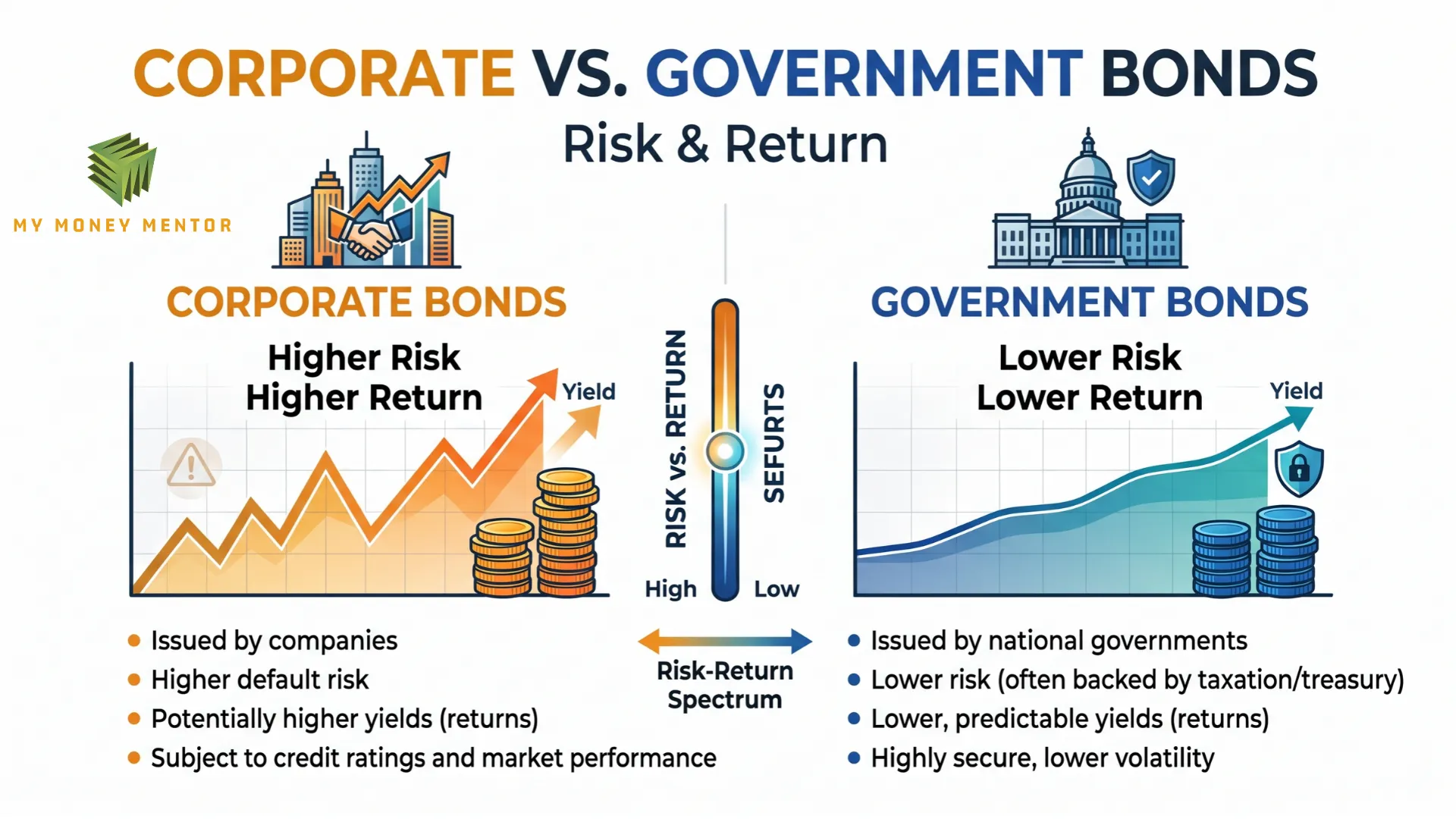
- Corporate bonds: Corporate bonds are issued by companies to raise money for business activities, expansion or other expenses. You can buy eligible listed corporate bonds through SEBI-registered online bond platforms without using a traditional stockbroker. Before investing, check the company’s credit rating and ability to repay the amount. A higher interest rate may also indicate higher credit risk.
- Sovereign gold bonds: Sovereign Gold Bonds are government securities linked to the price of gold. They allow investors to gain exposure to gold without storing physical gold. You can buy existing eligible SGBs through the secondary market on RBI Retail Direct. However, fresh subscriptions depend on government announcements.
Benefits of Investing in Bonds Without a Broker
If you want to understand how to invest in bonds India without a traditional broker, follow these steps based on the platform you choose:
- Lower transaction costs: When you invest directly through RBI Retail Direct, you do not pay brokerage or account opening and maintenance fees for the RDG account. This can reduce the cost of buying government securities.
- Easy online investment process: You can open an RDG account, check available securities, place bids and track your holdings online. You do not need to visit a broker’s office or handle physical bond certificates.
- Direct access to government bonds: You can buy Government of India securities, Treasury Bills and State Development Loans through RBI Retail Direct. You can also participate in government securities auctions without depending on a traditional stockbroker.
- More control over investments: Direct platforms let you choose securities based on their maturity dates, interest rates and investment amounts. You can also access eligible government securities in the secondary market if you want to buy or sell before maturity.
Risks of Investing in Bonds Without a Broker
Buying bonds without a traditional broker may save certain costs, but it does not make the investment risk-free. Whether you use RBI Retail Direct, NSE goBID or an online bond platform, your money is still exposed to risks related to interest rates, repayment and market conditions.
- Credit or default risk: This risk mainly applies to corporate bonds. A company may fail to pay interest on time or return your principal at maturity if it faces financial difficulties.
- Interest rate risk: Bond prices and market interest rates generally move in opposite directions. When interest rates rise, existing bond prices usually fall. This can lead to a loss if you sell before maturity.
- Liquidity risk: Some bonds have very few buyers in the secondary market. So, even if you want to sell before maturity, you may not find a buyer quickly or at your expected price.
- Reinvestment risk: When you receive interest from a bond, you may want to invest that money again. However, interest rates may have fallen by then, leaving you with fewer options to earn the same return.
Factors before Investing in Bonds
A bond offering 9% interest may look more attractive than one offering 7%. But does that automatically make it a better investment? Not necessarily. The issuer’s ability to repay, the bond’s maturity and its market price also matter.
- Credit rating: A credit rating gives you an idea of how likely the issuer is to repay the borrowed money. Rating agencies assess the issuer’s ability to pay interest and return the principal.
- Coupon rate: The coupon rate tells you how much interest a bond pays on its face value. Check whether the bond pays interest monthly, quarterly, half-yearly or annually.
- Yield to Maturity: YTM estimates the annual return you may earn if you buy the bond at its current price and hold it until maturity, assuming scheduled payments are made and other calculation assumptions hold.
- Maturity date: The maturity date tells you when the issuer is due to repay your principal. Choose a bond based on when you may need your money. If you need funds in three years, investing in a bond that matures after ten years may not suit your plans.
- Liquidity: Liquidity tells you how easily you can sell a bond before maturity. A bond may look attractive, but if there are very few buyers, you may have to wait or accept a lower selling price.
Conclusion
Understanding how to invest in bonds India can help you access fixed-income investments without depending on a traditional stockbroker. Platforms such as RBI Retail Direct and NSE goBID provide access to government securities, Treasury Bills and other eligible government bonds. For corporate bonds, SEBI-registered Online Bond Platform Providers offer another way to explore and purchase eligible debt securities.
However, investing without a broker does not remove investment risks. Before buying a bond, check the issuer’s credit rating, coupon rate, yield to maturity, maturity date and liquidity. Choose a bond based on its repayment ability and your investment timeline rather than its interest rate alone.
FAQs
Q: Can I buy bonds directly without a broker in India?
Ans: Yes. You can buy government bonds through RBI Retail Direct or NSE goBID. For corporate bonds, you can use SEBI-registered Online Bond Platform Providers (OBPPs).
Q: Can I buy government bonds without a demat account?
Ans: Yes. RBI Retail Direct allows you to buy government bonds using an RDG account without a demat account. However, NSE goBID requires a demat account for its direct registration route.
Q: What is the minimum amount required to invest in bonds?
Ans: The minimum investment in Government of India bonds, Treasury Bills and State Development Loans through RBI Retail Direct is ₹10,000. For Sovereign Gold Bonds, it is one gram of gold. Corporate bond minimums vary.
Q: Can I buy corporate bonds without a broker?
Ans: Yes, you can buy eligible corporate bonds without using a traditional stockbroker. You can use an Online Bond Platform Provider (OBPP) registered with a recognised stock exchange under SEBI’s regulatory framework.
Q: Can I sell bonds before maturity?
Ans: Yes, you can sell bonds before maturity if they are available for trading in the secondary market and you find a buyer. However, the selling price may be higher or lower than your purchase price, depending on prevailing interest rates, demand and the issuer’s creditworthiness.