


A solution-oriented mutual fund scheme in India, called the children’s mutual fund, is a specialised mutual fund scheme designed to help parents or guardians build a corpus that secures their child’s future. The proceeds or accumulated funds can be used to cover a child’s education and major life expenses. Such funds usually have a lock-in of 5 years or till the child reaches 18 years of age, whichever is earlier. Withdrawal before the lock-in period completes attracts an exit load that can vary from one fund to another. This promotes disciplined investing. Furthermore, such funds simplify planning as it automatically diversifies across equity, debt, and hybrid mixes to aid long-term wealth creation for a child.
The table below lists the best mutual funds for child education in India, selected and ranked based on their Asset Under Management (AUM) as of 19 May 2026. All the schemes listed here are direct growth funds.
| Fund Name | AUM (₹ Crore) | 5-Year Returns | 10-Year Return |
| HDFC Children’s Fund | 10,151.93 | 12.28% | 13.62% |
| SBI Children’s Benefit Fund- Investment Plan | 6,114.10 | 25.68% | – |
| ICICI Prudential Children’s Fund | 1,412.21 | 14.74% | 13.01% |
| Aditya Birla Sun Life Bal Bhavishya Yojna | 1,175.44 | 9.32% | – |
Let us now analyse each of these mutual funds for child education in India individually.
-
HDFC Children’s Fund
The HDFC Children’s Fund has the largest AUM among its peers listed here. Incorporated on 1 January 2013, this fund is managed by Chirag Setalvad and Anil Bamboli. Equities and equity-related securities will account for 65–80% of its total assets, with the remaining portion going toward debt and money market instruments. The top 5 sectors that this fund invests in include financial, industrial, technology, healthcare, and energy & utilities. Some of its top holdings are listed in the table below.
| Asset | Percentage held |
| HDFC Bank Ltd. | 6.91% |
| ICICI Bank Ltd. | 6.53% |
| Larsen and Toubro Ltd. | 3.61% |
The fund invests in both debt and equity, with a greater equity tilt. It includes a debt allocation of 28.75%, along with a significant equity allocation of 65.72%. Therefore, the risk metrics of the HDFC Children’s Fund can be measured by the following metrics.
| Metrics | HDFC Children’s Fund Direct | Aggressive Hybrid Category |
| Standard Deviation (%) | 10.98 | 12.14 |
| Sharpe Ratio (%) | 0.52 | 0.70 |
| Sortino Ratio (%) | 0.70 | 0.91 |
The lower standard deviation of the fund compared to the category indicates a lower volatility in the fund. However, the Sharpe and Sortino ratios are also lower, implying a lower return efficiency compared to the risk.
-
SBI Children’s Benefit Fund- Investment Plan
Incorporated on 29 September 2020, the SBI Children’s Benefit Fund- Investment Plan holds the highest 5-year returns among its peers listed. The graph below shows the performance of the mutual fund since its inception in 2020.
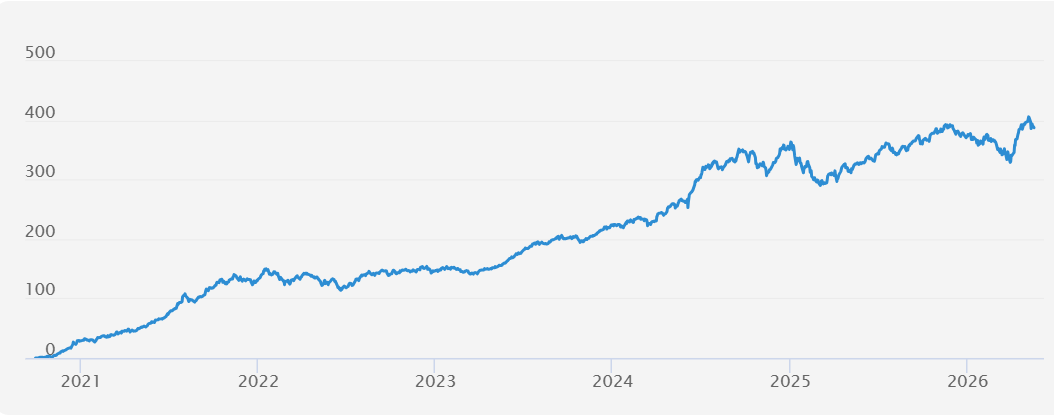
The mutual fund is managed by R. Srinivasan and Lokesh Mallya. Furthermore, its benchmark is CRISIL Hybrid 35+65 – Agg TR INR. The top five industries in which the fund invests are consumer discretionary, technology, financial, materials, and Industrials. The table below lists the stocks that have the largest concentration in the fund portfolio.
| Asset | Percentage held |
| Alphabet Inc Class A (GOOGL) | 7.79% |
| SBI | 6.29% |
| Thangamayil Jew | 4.80% |
Therefore, the fund has an equity concentrated portfolio mix with 80.71% equity, 0.16% debt, and 19.13% cash and cash equivalents. Out of its 36 stock holdings, the top 10 holdings account for 44.97%. The table explains the fund risk profile.
| Metrics | SBI Children’s Investment Plan | Aggressive Hybrid Category |
| Standard Deviation (%) | 16.13 | 12.14 |
| Sharpe Ratio (%) | 1.12 | 0.70 |
| Sortino Ratio (%) | 1.70 | 0.91 |
The standard deviation is higher than the category, showing greater volatility. However, the higher Sharpe and Sortino ratios indicate greater return efficiency given the risk taken.
-
ICICI Prudential Children’s Fund
Managed by Rohit Lakhotia, Sharmila D’mello, Aatur Shah, and Darshil Dedhia, the ICICI Prudential Children’s Fund was incorporated on 31 August 2001. The fund tracks the benchmark Nifty 50 TR INR. The graph below illustrates its performance since inception.
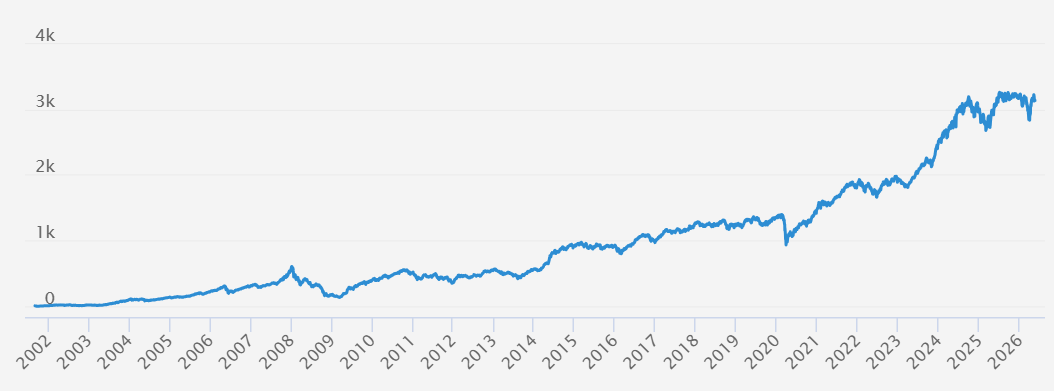
Similar to its peers, it has a greater equity allocation with considerable debt assets. 77.88% of its portfolio is invested in equity, while 13% is in debt. Materials, financials, industrials, energy & utilities, and healthcare are its top industry holdings. The table below lists the equities that have the highest concentration in their portfolio.
| Asset | Percentage held |
| Reliance Industries | 8.87% |
| HDFC Bank | 7.38% |
| Atul | 4.34% |
The mutual fund has a very high risk rating, similar to the other funds listed in this categorisation. The table below shows the key risks and risk-adjusted return metrics to help investors judge the investability of the asset.
| Metrics | ICICI Pru Children’s Fund | Aggressive Hybrid Category |
| Standard Deviation (%) | 14.83 | 12.14 |
| Sharpe Ratio (%) | 0.81 | 0.70 |
| Sortino Ratio (%) | 1.08 | 0.91 |
The table suggests that although the volatility experienced by the fund is greater than its comparable category, its returns seem efficient given the risk taken. The high Sharpe ratio suggests greater return with an additional risk, while the higher Sortino ratio suggests that the fund compensates better for downside risk.
-
Aditya Birla Sun Life Bal Bhavishya Yojna
Incorporated on 12 February 2019, Aditya Birla Sun Life Bal Bhavishya Yojna fund is managed by Chanchal Khandelwal and Harshil Suvarnkar. Nifty 500 TR INR serves as the benchmark of this fund. The graph below illustrates its performance since inception.
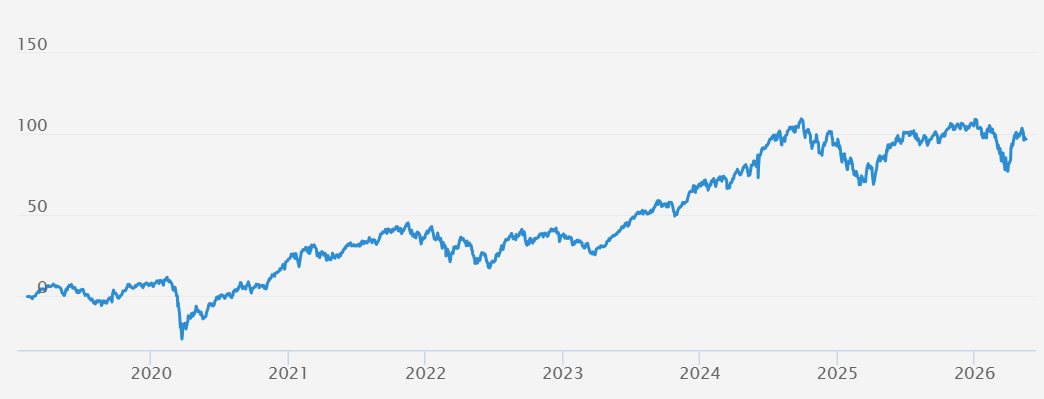
The mutual fund 97.41% equity with no debt holdings and 2.59% in cash and equivalents. Among the 74 stocks in its portfolio, the top 10 equities have 31.28% concentration. Financials, materials, consumer discretionary, industrials, and technology are the top five industries in its portfolio. The table below lists the stocks that have the highest concentration in the portfolio of this mutual fund for child education in India.
| Asset | Percentage held |
| ICICI Bank | 5.59% |
| Reliance Industries | 4.03% |
| HDFC Bank | 3.95% |
The mutual fund has a very high risk rating. Therefore, analysing the risk metrics is important before investing to ensure that it is within the risk appetite of an investor.
| Metrics | ICICI Pru Children’s Fund | BSE 500 TRI |
| Standard Deviation (%) | 15.50 | 15.46 |
| Sharpe Ratio (%) | 0.55 | 0.60 |
| Sortino Ratio (%) | 0.76 | 0.77 |
The standard deviation is slightly higher than the benchmark, while the Sharpe and Sortino ratios are lower. This indicates that despite witnessing greater volatility, the risk taken by the fund does not justify the returns.
Now, before finalising any investment, investors should understand the parameters they must analyse to decide on an asset.
Parameters to Consider to Choose the Mutual Fund For Child Education in India
Different metrics, explained in fund fact sheets, illustrate the return-risk profile and intrinsic attributes of a fund. An investor should analyse the fund parameters to judge if it suits their needs. Discussed below are some of these parameters.
- Tenure: The time period left before the investor needs the corpus to fund their child’s education plays a key role. If the money is required in the short-term, say in five years, low to medium-risk categories like short-duration debt funds or balanced and conservative hybrid funds might be optimal, as they offer stability. However, in the long-term, volatility can correct itself. Therefore, investors can choose high-risk assets like equity funds.
- Return and Risk: The risk and return anticipation not only depend on tenure but also on the individual investor’s profile. If an investor can withstand greater volatility, they might choose growth or aggressive hybrid funds. However, risk-averse investors might prefer debt assets or conservative funds, despite a longer tenure.
- AUM: In the case of a solution-oriented category like a children’s fund, analysing the AUM is essential to choose a fund that has sufficient market position. A fund with low AUM can have a greater risk profile.
- Early start: Beginning a mutual fund investment early allows the corpus to gain greater compounding benefits. Given rising education costs and inflation, this is crucial for building an optimal fund for education.
However, not just the solution-oriented children’s mutual fund, other asset categories can also fund a child’s education.
Can Other Mutual Fund Categories Help Build a Child’s Education Fund?
Not just a children’s mutual fund, investors can choose any mutual fund category, based on their risk and return requirements, to build a corpus that funds their child’s education.
For instance, Mr K can choose to invest in small-cap mutual funds, rather than a solution-oriented children’s fund, as they offer higher returns, and given that Mr K has begun his investment early, he has a substantial tenure to withstand short-term volatility.
However, in this case, the onus of selecting a fund with an optimal asset mix, which fits their tenure requirement, risk and return profile, falls on the investor.
The table below lists some popular mutual fund categories for short-term and long-term.
| Fund | Suitable Tenure | 1-Year Return (%) | 3-Year Return (%) | 5-Year Return (%) |
| Small-Cap Fund | Long term | 4.42 | 18.36 | 18.10 |
| Large-Cap Fund | Medium to Long term | -3.26 | 12.33 | 11.21 |
| Aggressive Allocation Fund | Medium to Long term | -0.04 | 12.98 | 11.70 |
| Balanced Allocation Fund | Medium term | -1.43 | 8.01 | 7.94 |
| Conservative Hybrid Fund | Short to medium term | 0.90 | 7.73 | 7.51 |
| Corporate Bond Fund | Short to medium term | 3.49 | 6.59 | 5.83 |
However, then why should people choose children’s funds?
Why Choose a Mutual Fund For Child Education in India?
Solution-oriented funds have their unique advantages and benefits. Discussed below are the key features of a children’s fund that attract investors.
- Disciplined long-term investing: Many children’s funds have a lock-in period. This ensures that investors stay committed to building the corpus. Especially for goals like a child’s education, this induces discipline and planned investment.
- Allocation of experienced fund managers: Professional mutual fund managers determine and dynamically change asset allocation, keeping the specific goal in mind. This reduces the burden on investors and ensures efficient allocation and diversification.
Bottomline
Mutual fund investing not only requires optimal analysis of the fund and its category, but also the individual profile of the investor. Alignment of both is crucial for efficiency. Whether an investor chooses a solution-oriented children’s fund or otherwise, the risk, returns, portfolio mix, and others should be as per their needs and goals.