


Summary
- An applicant can apply for a smaller amount, add a co-applicant, or apply through non-banking financial institutions for a personal loan despite having a low CIBIL score.
- The reasons behind a low CIBIL score are delayed or default payments, no credit history, and multiple applications within a small time.
Although getting approved for a loan while having a low CIBIL score seems impossible, there are ways that can still help you secure a loan. For instance, applying for a smaller amount reduces the credit risk for the lenders and also helps to recover the poor score. You can even add a co-applicant who has a good score to share the credit risk, or apply through a non-banking financial company that might offer loans at a greater interest rate than regular banks.
What is a CIBIL score?
A CIBIL score is a 3-digit number ranging from 300 to 900 that indicates an individual’s creditworthiness. Banks and financial institutions use it to determine the eligibility of applicants to secure a loan. This is generated by TransUnion CIBIL, which is one of India’s leading credit information businesses, regulated by the Reserve Bank of India. It includes information regarding an individual’s past history of loans and credit payments.
When you apply for a loan, having a higher CIBIL score enhances loan eligibility, increases approval chances, and may help you secure lower interest rates. It demonstrates financial discipline and responsible management of credit obligations. However, a low credit score causes resistance and raises concerns about repayment obligations.
What is considered a Low CIBIL score?
CIBIL scores range from 300 to 900, with each score category representing a different level of credit risk. Lenders use these scores to assess the probability of approving a loan application.
| Score category | Rating |
| 750 and above | Great |
| 700-749 | Good |
| 650-699 | Average |
| 600-649 | Poor |
| Below 599 | Action needed |
Individuals with a CIBIL score between 700 and 900 are more likely to get their loans approved faster. A CIBIL score below 700 can make loan approval more challenging, as lenders may impose higher interest rates, stricter verification processes, and tighter eligibility requirements. CIBIL scores closer to 300 are considered poor, indicating an urgent need to improve the CIBIL score, or it may even lead to rejection of the loan request.
Imagine you and your friend both applied for a car loan. Your CIBIL score shows 735, while your friend’s score shows 560. Both of your income levels are similar. However, you seem to keep track of your bills and payments, but your friend has a history of delayed dues. For this reason, your application is more likely to get approved by the lender as you are identified as low-risk.
Why is your CIBIL score low?
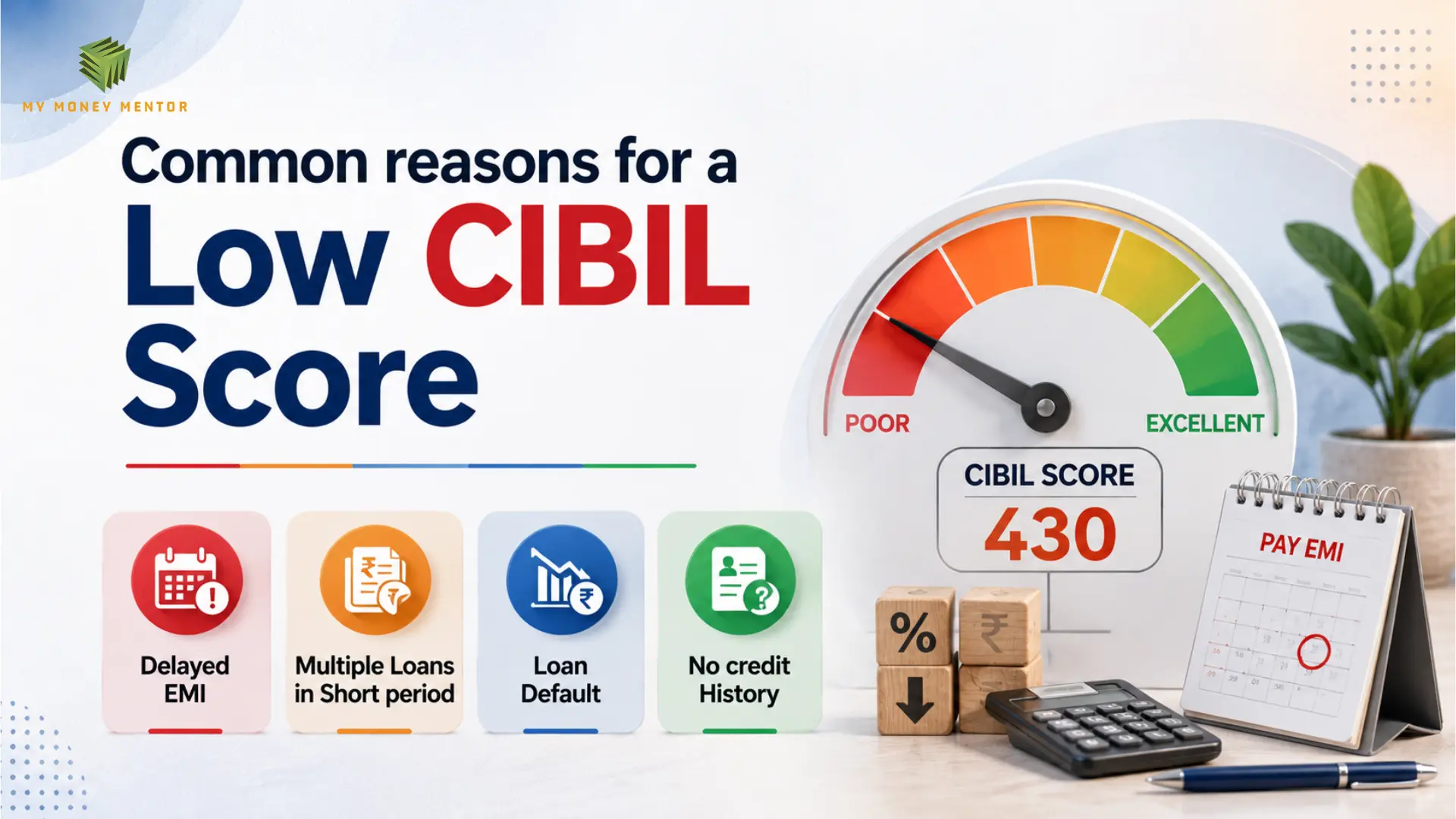
There are multiple reasons that negatively affect an individual’s CIBIL score, indicating poor credit reliability. Some of them are given below.
Delayed EMI
Timely repayment of loan EMIs plays a crucial role in maintaining a healthy CIBIL score. Missing EMIs or making delayed payments can negatively affect your credit history and reduce your chances of obtaining loans in the future. Every missed payment is reported to credit bureaus, where it remains part of your credit record.
For example, Rahul had a personal loan with a monthly EMI of ₹5,000. Due to temporary financial challenges, he failed to pay his EMIs for five consecutive months. Although he resumed repayments later, the repeated defaults had already lowered his CIBIL score. As a result, lenders considered him a higher-risk borrower, making it more difficult for him to qualify for new loans or obtain them at competitive interest rates.
Multiple Loans in a Short Period
Applying for multiple loans at the same time may seem like a practical way to improve your chances of approval, especially during a financial emergency. However, this approach can negatively affect your CIBIL score. Every time you apply for a loan, the lender conducts a hard inquiry on your credit report. Several hard inquiries within a short period can indicate to lenders that you are actively seeking credit and may be under financial pressure.
For example, Shalini applied for an education loan, a home loan, and four personal loans within a month, resulting in six hard inquiries on her credit report. Instead of increasing her chances of securing a loan, the repeated applications made lenders perceive her as a riskier borrower. Consequently, her loan approval prospects declined. To avoid this, it is advisable to compare loan options first and apply only to the lender that best matches your eligibility and financial requirements.
Loan Default
Missing a few EMIs is one thing, but completely defaulting on a loan can leave a long-lasting mark on your credit history. Loan defaults are viewed as one of the strongest indicators of repayment risk, making lenders reluctant to approve future credit applications of such nature. Let’s take the case of Hemant, who borrowed ₹1,00,000 as a personal loan. After facing financial difficulties, he stopped making repayments altogether, and the loan eventually went into default. A few years later, when he needed another loan, he discovered that his previous default had significantly lowered his CIBIL score. Most lenders either rejected his application or were willing to lend only on stricter terms because they questioned his ability to repay. This highlights why consistently paying your EMIs on time is essential, not only to maintain a healthy CIBIL score but also to keep future borrowing options open.
No Credit History
Even never taking a loan can make it difficult to get a personal loan. While it isn’t viewed as negatively as having a low CIBIL score, lenders have no way of assessing how responsibly you handle borrowed money. Imagine a recent graduate applying for their first personal loan. They have a stable job and a regular income but have never used a credit card or taken any loan before. Since there is no credit history to evaluate their repayment behaviour, lenders may hesitate to approve the application or offer a smaller loan amount. Simply put, without enough credit information, lenders find it difficult to measure the applicant’s repayment risk, which can reduce the chances of loan approval.
How to Get a Personal Loan with a Low CIBIL Score
Although an individual with a low CIBIL score faces difficulties for loans, various strategies can be used to get loans approved. Some of them are given below.
Apply for a Small Amount
If you have a low CIBIL score, applying for a smaller loan amount can improve your chances of approval. Since smaller loans involve less financial risk, lenders are generally more willing to approve them than larger loan requests. For example, if you need ₹3 lakh but can manage your immediate expenses with ₹75,000, opting for the smaller amount may work in your favour. Once you repay the loan consistently and on time, you gradually build a positive repayment history. This demonstrates financial discipline, helps improve your CIBIL score, and increases your eligibility for larger loans in the future.
Add a Co-applicant
If your CIBIL score is low, adding a co-applicant with a strong credit profile can improve your chances of getting a personal loan. Lenders evaluate the combined creditworthiness and repayment capacity of both applicants, reducing the risk associated with lending to a single borrower. For example, if your CIBIL score is 650 but your spouse has a score of 790 along with a stable income, applying together may strengthen your loan application. Since both applicants share equal responsibility for repaying the loan, lenders gain greater confidence in the repayment process. In most cases, a co-applicant is a close family member, such as a spouse, parent, or sibling, who is willing to take joint responsibility for the loan. This not only increases the likelihood of approval but may also help you secure better loan terms.
Apply through NBFCs or Fintech Lenders
Many NBFCs and fintech lenders use a broader approach when assessing loan applications. Rather than depending only on your CIBIL score, they also consider factors such as your income stability, employment record, banking transactions, and even your overall credit profile. For example, imagine two applicants with the same CIBIL score of 650. One has a stable job, receives a regular monthly salary, and maintains healthy banking transactions, while the other has an irregular income and a history of missed repayments. Even though their CIBIL scores are identical, an NBFC or fintech lender is more likely to approve the first applicant because they assess the borrower’s overall financial profile rather than just the credit score.
Although these companies approve the loans easily, they tend to charge a higher rate of interest to compensate for the risk involved. Individuals must carefully compare the rates before making an application.
Documents Required for a Personal Loan Application
Documentation is a key part of the loan application process. Whether you approach a bank or an NBFC, you will need to provide essential documents to establish your identity, income, and repayment capacity. Those are mentioned below.
ID Proof
The identification documents required to be submitted while applying for a loan are:
- Aadhaar Card
- Passport
- Voter ID
- PAN Card
- Driver’s License (if applicable)
ID verification documents play a crucial role in the loan approval process. They enable lenders to verify the borrower’s identity and validate essential information such as their residential address and date of birth, helping to prevent fraud and ensure regulatory compliance.
Income Proof
Income verification is a key step in the lending process, as it allows lenders to evaluate an applicant’s financial strength, income consistency, and ability to meet future loan obligations.
Salaried individuals are usually required to submit salary slips along with Form 16, which shows their annual income and the TDS deducted by their employer.
The documents for self-employed applicants include Income Tax Returns (ITRs), income statements, and bank statements.
Employment Proof
The documents required to prove current employment status for both salaried and self-employed applicants include the following:
- Employment ID Card
- Offer letter
- Employee Certificate
- Registration Certificate
- Trade License
These documents help to understand the current employment status of an applicant.
How to Improve your CIBIL score?
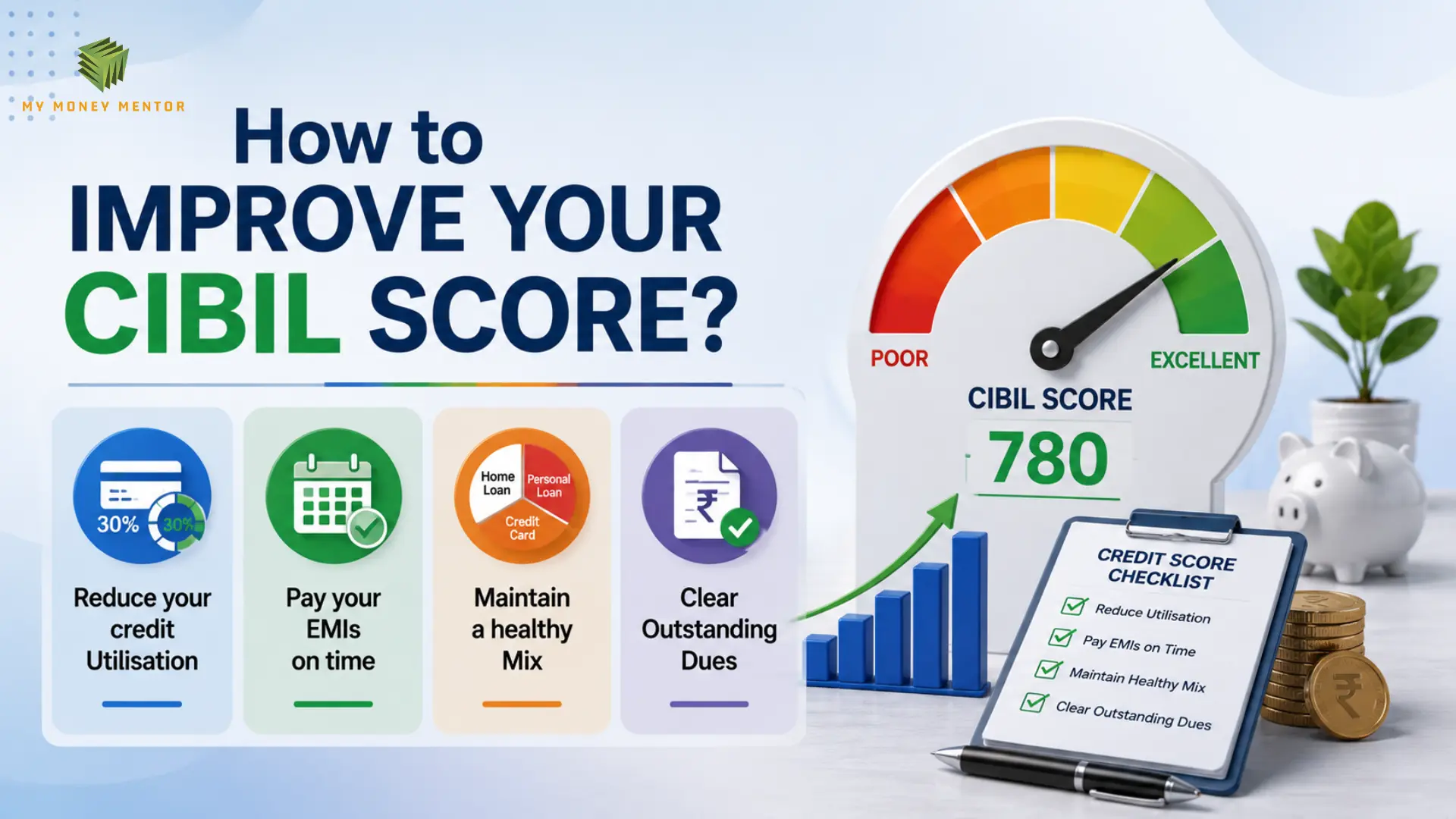
A low CIBIL score has the potential to improve under consistent and disciplined financial practices. Although it may not work overnight, it will open doors for future credit requirements, making it easier for approval.
Reduce Credit Utilisation
Credit utilisation indicates the ratio of your available credit limit, depending on your usage. If the usage is closer to its credit limit, then it raises concern regarding the degree of dependency of an applicant on credit.
Reducing the utilisation of credit will help to rebalance the score. Increasing the credit limit or reducing the spending on credit will help to build the balance on the CIBIL score, making it easier to apply for loans in the future.
Pay EMIs On Time
Payment of EMIs and bills on time is one of the most important and impactful practices that will help an applicant rebuild their CIBIL score. Inability to pay on time reduces the possibility of building trust with the lenders. This makes the applicant a high-risk borrower.
Payment made on or before the due date shows discipline and reliability, and positively impacts the score level. This helps lenders get assurance on the repayment of their loans. To be consistent, applicants can auto-debit their EMI payments or maintain a calendar reminder that reminds them of the upcoming due dates.
Maintain a Healthy Mix
Lenders usually look for applicants who have the ability to handle different types of credits, such as secured and unsecured credits. Applicants must maintain a healthy mix of secured and unsecured loans showing efficient management of the loans. A long and balanced credit history also positively impacts the credit score of an applicant, encouraging them to continue old credit card accounts.
| Basis | Secured loan | Unsecured loan |
| Meaning | A loan backed by a security or collateral | A loan without any security |
| Risk | Relatively lower risk because the lender can recover by selling the assets | Higher risk because no asset supports the loan |
| Security | It requires security such as property, vehicle, gold, and other assets | It does not require any collateral or security |
| Interest | Generally lower interest rate | Higher interest risk |
Clear Outstanding Dues
Applicants must try to resolve any outstanding dues on their credit card accounts. Having an unresolved credit card account may negatively impact the CIBIL score. Therefore, they must consider making any outstanding repayments that are due on the account to improve the CIBIL score.
Conclusion
Getting a personal loan with a low CIBIL score can be difficult, but it is not impossible. Many lenders, especially NBFCs and fintech companies, consider factors beyond your credit score, such as your income, employment stability, repayment capacity, and overall financial profile. Choosing the right lender, applying for loans barely meeting the criteria, and considering a co-applicant or guarantor can significantly improve your chances of loan approval.
While a low CIBIL score may result in stricter loan terms or higher interest rates, careful planning can help you secure the required funds. Compare multiple loan offers, borrow only what you need, and review the terms and charges before accepting any offer. Taking these steps can help you obtain a personal loan while also building a stronger credit profile for future borrowing.
FAQs
Can I get a personal loan with a low CIBIL score?
Yes. Many NBFCs and fintech lenders offer personal loans to borrowers with low CIBIL scores. Approval typically depends on factors such as income, employment stability, repayment capacity, and existing financial obligations.
What is the minimum CIBIL score required for a personal loan?
There is no universal minimum score. While many banks prefer scores above 750, some lenders may consider applications with scores between 550 and 650, depending on the applicant’s financial profile.
Will applying for a loan lower my CIBIL score further?
A loan application may result in a hard inquiry, which can slightly affect your score. Multiple applications within a short period can have a greater impact, so it is advisable to apply selectively.
Does adding a co-applicant improve my chances?
Yes. A co-applicant with a strong credit score and stable income can strengthen the application and improve approval prospects.
How long does it take to improve a low CIBIL score?
The timeline varies depending on your financial behaviour. Consistently paying EMIs on time, reducing debt, and maintaining healthy credit habits can lead to noticeable improvements within a few months, although significant improvements may take longer.